

Welcoming a friend, family member or client with a visual impairment into your home is an opportunity to create a space that is safer, more comfortable and more inclusive for everyone. While some accommodations may evolve over time as you better understand individual needs, there are several practical updates you can make right away to ease the transition and reduce potential hazards. Here are seven thoughtful home modifications you can start with today.
# 1. Secure or Remove Throw Rugs
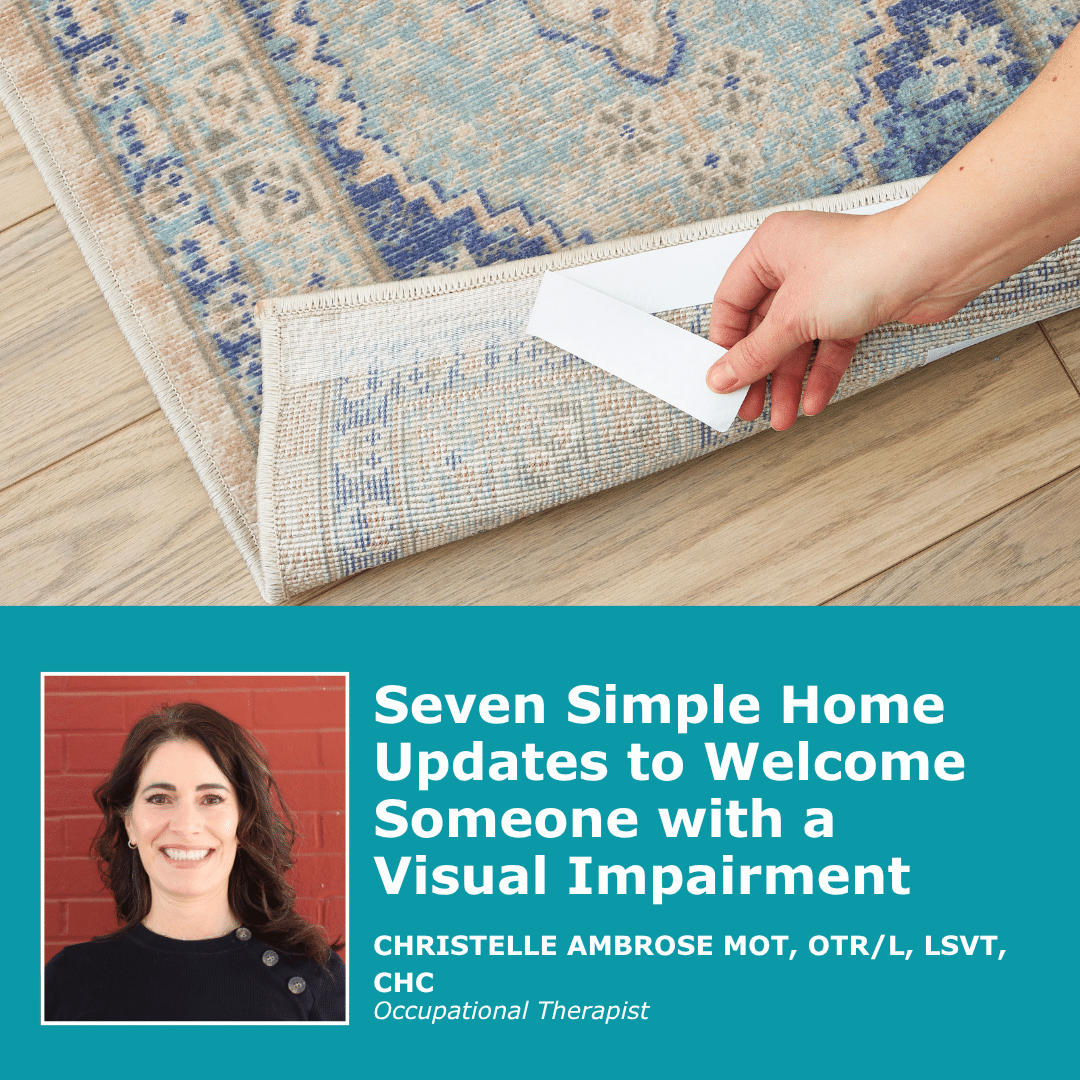
Loose throw rugs can easily become tripping hazards, especially for individuals with low vision or those who use mobility aids such as a white cane or walker. If rugs are purely decorative, consider removing them altogether. For rugs you wish to keep, make sure they are firmly secured by tacking down the edges or using non-slip rug tape to prevent shifting.
# 2. Improve Lighting Throughout the Home
Proper lighting plays a major role in home safety. Dimly lit rooms, corners or hallways can make navigation more difficult for someone with a visual impairment. Adding floor or table lamps as well as increasing bulb brightness by switching to daylight or soft-white LED bulbs can significantly improve visibility and help define spaces more clearly. Consider removing dark drapery and opening the blinds to let natural light shine in.
# 3. Keep High-Traffic Areas Clear and Open
Clear, predictable pathways make moving through the home more comfortable and safer. Take time to remove unnecessary furniture or items, such as footstools, decorative stands or extra chairs from commonly used walkways. Wide, unobstructed routes between major areas of the home help reduce the risk of collisions or falls.
# 4. Use Color Contrast to Highlight Key Features
Strong color contrast can help people with low vision distinguish between objects and surfaces more easily. Simple changes like using brightly colored towels against light bathroom walls or contrasting placemats on a dining table can make everyday tasks easier and less frustrating. When possible, choose colors that stand out clearly from their surroundings.
# 5. Install Night Lights in Key Areas
Navigating a home at night can be especially challenging when lighting conditions change. Motion-sensor or plug-in night lights placed in hallways, bathrooms, bedrooms, and stairwells provide gentle, consistent illumination and help guide movement after dark without disrupting sleep.
# 6. Maintain Clutter-Free Walkways
Items like shoes, toys, bags, or cords left on the floor may go unnoticed by someone with limited vision and can quickly become tripping hazards. Teach everyone in the household to develop a habit of keeping floors and walkways clear. Don’t forget to watch for pet toys that our furry friends leave behind!
# 7. Clearly Mark Steps and Stairways
Steps and stairs can be difficult to detect for individuals with low vision. Adding high-contrast, brightly colored tape to the edge of each step can provide a visual cue that signals a change in elevation. In areas used at night, glow‑in‑the‑dark or reflective tape can offer added visibility when lighting is reduced.
In closing, helping someone feel at home takes time, patience and flexibility. These updates work best when combined and adapted to the individual’s unique vision needs. Small, proactive changes can make a meaningful difference in safety, independence and overall comfort.
If you or someone you love is experiencing vision loss and could benefit from our services, please contact Future In Sight at [email protected] or 603-224-4039 today!
About the Author: Christelle Ambrose is an Occupational Therapist (OT) at Future In Sight. OTs work with our adult and senior clients in their homes and communities to help them continue to live as independently as possible. Learn more about our Adult Services here.