

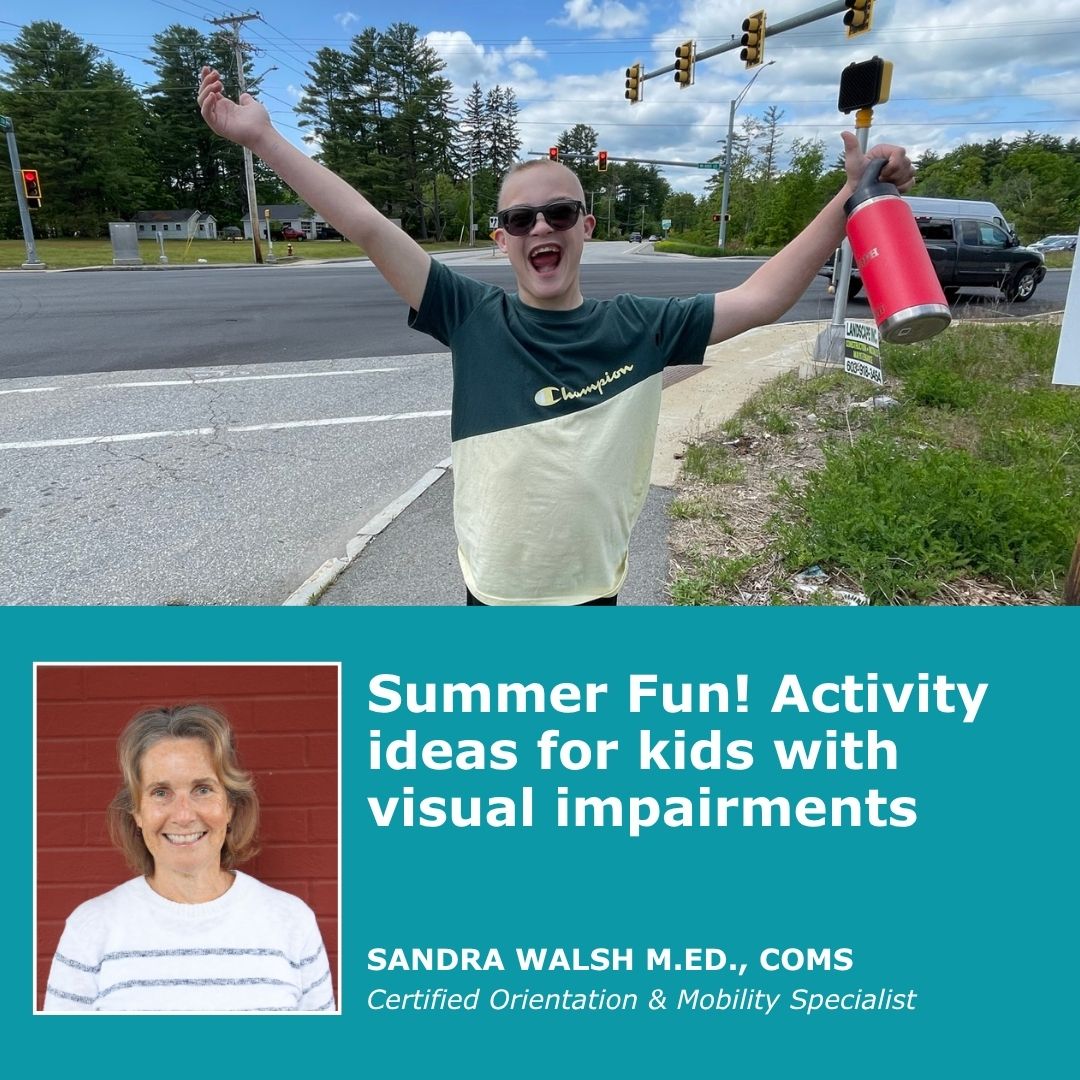
Summer is a wonderful time for kids to explore, play and build independence. For children with visual impairments, the best summer activities are hands-on, meaningful and fun. With a few simple adaptations, families can create experiences that support sensory exploration, confidence, movement and social connection while making the most of the season.
Accessible Summer Activity Ideas
- Nature walks: Take walks in familiar parks, trails or neighborhoods and talk about what your child can hear, smell and feel along the way. Take the time to explore tree bark, flowers, grass and other natural textures. Collect leaves, flower petals, twigs, berries or small pinecones and make a nature bracelet. The Mud & Bloom website has great suggestions.
- Water play: Use sprinklers, water tables, buckets, sponges or shallow pools for refreshing sensory fun. Add cups, funnels and floating toys for extra exploration. The Paths to Literacy website has some suggestions. The water mat for babies sounds especially fun for encouraging tummy time.
- Gardening: Let children dig, water, plant herbs or flowers, and notice differences in texture and scent. A quick google search can provide suggestions for herbs with strong scents and plants with distinct textures. And, who doesn’t enjoy picking a strawberry or cherry tomato straight from the vine and popping it into their mouth! Gardening can also build responsibility and daily living skills. An elevated raised bed or tabletop containers eliminate bending and may be more accessible for children with mobility challenges.
- Outdoor music time: Bring out instruments, create homemade shakers or DIY wind chimes. Look up local, free concerts. Music supports listening skills and joyful movement. Go for a listening walk and listen for neighborhood sounds. Pair it with the book, The Listening Walk by Paul Showers.
- Sensory scavenger hunts: Create simple hunts based on sound, texture, shape or smell. For example, find something rough, cool, or that makes noise. Scavenger hunts can also take place inside on rainy days and will support daily living skills. For example, find an unopened roll of toilet paper, spoon, band-aid, or potholder.
- Sidewalk obstacle courses: Set up safe movement paths using cones, pool noodles, textured markers, or verbal cues. These activities can support orientation and mobility skills in a playful way.
- Farmers market or ice cream outings: Community trips allow kids to practice ordering, handling money, making choices, and exploring new environments with support.
- Beach or sandbox play: Scooping, pouring, digging and comparing wet and dry textures can be fun and educational. Seashells, small buckets and molds add even more tactile learning. A family favorite is making a sand ramp at the beach and sending a small plastic golf ball down. This activity is great for visual tracking. If you cannot get to a beach or do not have a sandbox, create a sensory bin. The Paths to Literacy website has directions on making a Snap, Crackle and Pop Sensory Bin and variations.
- Cooking summer snacks: Make fruit salad, popsicles, trail mix or lemonade together. Cooking helps build sequencing, measuring, motor skills and independence.
Simple Tips for Success
- Use clear verbal descriptions before and during activities.
- Offer tactile exploration time before expecting participation.
- Focus on fun first and let the child’s interests guide the experience.
Summer activities do not have to be complicated or cost a lot of money to be meaningful. Most importantly, do activities that interest your child and have fun!
About the Author: Sandra Walsh is a Certified Orientation & Mobility Specialist (COMS) who teaches students with visual impairments how to safely navigate their environment. Learn more about the services Future In Sight offers to youth here.