

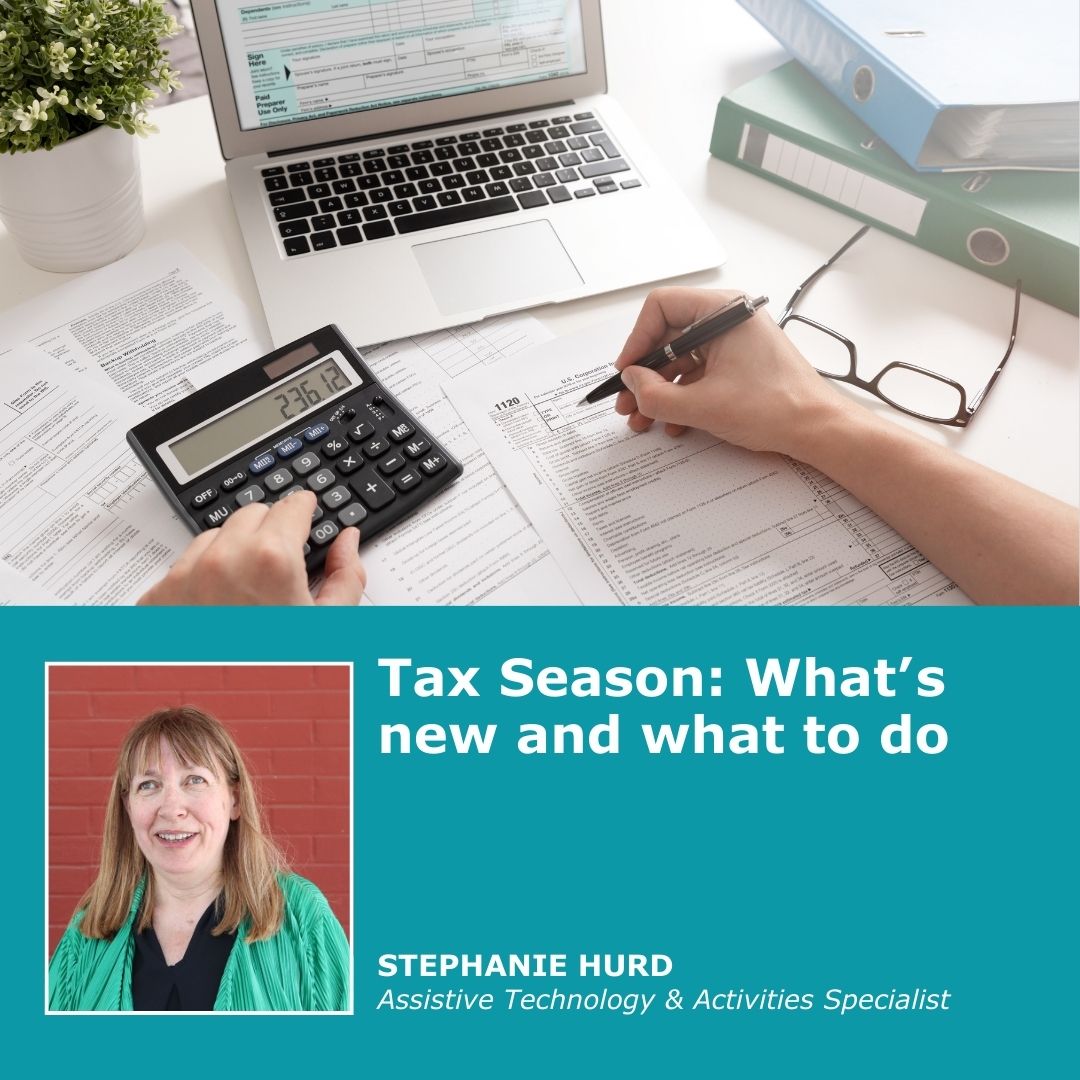
Tax season has arrived — and while it may not spark excitement, it doesn’t have to create stress either.
With a little preparation and the right information, filing your taxes can be straightforward, affordable, and empowering. This year brings updated deductions, free filing options, and accessible tools that make the process more manageable — especially for individuals who are blind or visually impaired.
Start Smart: A Little Preparation Goes a Long Way
The IRS encourages taxpayers to take a few simple steps before filing:
- Gather all income documents before submitting your return
- Double-check personal information and Social Security numbers
- Confirm direct deposit details for faster refunds
- Keep records of any advance payments or tax credits received
Filing electronically and choosing direct deposit remains the fastest and most secure way to receive your refund.
What’s New for Tax Year 2025 (Filed in 2026)
- Additional Deduction for Seniors: Taxpayers age 65 and older may qualify for an extra $6,000 deduction — particularly helpful for seniors living on fixed incomes.
- Deduction for Tipped Workers: Eligible workers may be able to deduct up to $25,000 in qualified tip income.
- Deduction for Overtime Pay: Workers who earned overtime may deduct up to $12,500 in qualified overtime pay — or up to $25,000 for married couples filing jointly.
-
Passenger Vehicle Loan Interest Deduction: Up to $10,000 in qualified passenger vehicle loan interest may be deductible.
These provisions are available whether you take the standard deduction or itemize. Income phase-outs and eligibility requirements apply. For details specific to your situation, visit IRS.gov and review provisions for individuals and workers or consult a qualified tax preparer.
Free Tax Preparation Is Available
The IRS sponsors the Volunteer Income Tax Assistance (VITA) program, which offers free tax preparation for individuals and families who generally earn around $60,000 per year or less, people with disabilities, and taxpayers needing language assistance. In New Hampshire, Granite United Way coordinates VITA services. Calling 211 can connect you with local appointment information.
Filing with Vision Loss: Access and Independence
Many tax platforms and financial institutions work well with screen readers, refreshable Braille displays, magnification software, and built-in accessibility features. The IRS also offers accessible forms in large print, Braille-ready files, text-only versions, and accessible PDFs. Taxpayers needing accessibility assistance can call 833-690-0598. General IRS assistance is available at 800-829-1040.
Don’t Forget About Charitable Giving
If you made donations to qualified nonprofit organizations, those contributions may provide tax benefits — particularly if you itemize deductions. Keep written acknowledgments and accurate records.
Want More Financial Guidance?
For individuals who are blind or visually impaired looking to strengthen financial skills, Penny Forward offers education and community-based learning focused on money management and financial independence — including guidance around tax season.
Final Thought: File with Confidence
With new deductions available, free preparation programs like VITA, accessible IRS resources, and financial education opportunities, you have options. Gather your documents. Review what’s new. Ask for help if you need it. And file knowing you’ve taken the right steps to protect your financial future.
For more information or if you or a loved one is experiencing vision loss and could benefit from our services, please contact Future In Sight at [email protected] or 603-224-4039 today!
About the Author: Stephanie Hurd is an Assistive Technology Specialist at Future In Sight.