

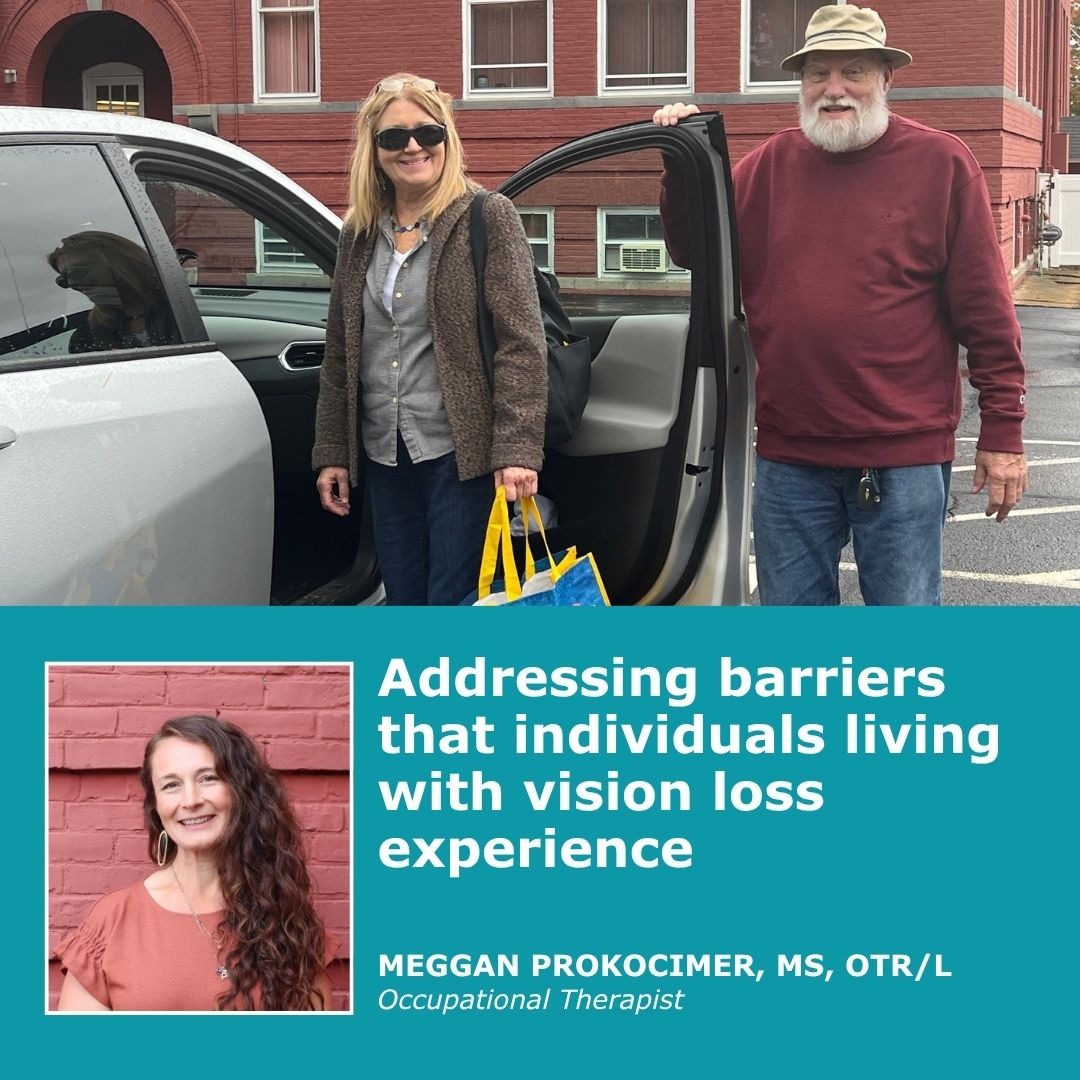
People living with vision loss face challenges that extend beyond changes with their vision. Barriers can often include accessing low vision specialists and resources, transportation, covering costs of vision aids and services, learning new technology and accessing psychosocial/emotional support. Addressing these barriers and challenges is the key to improving independence, quality of life and participation in meaningful daily activities.
Accessing low vision services
One of the biggest challenges is awareness of low vision services that are available. Whether your vision loss is mild or more significant, there are often services that are available to help you with the things that may be getting harder for you to do and to help you stay independent and continue doing the things you enjoy.
Transportation
Getting rides to appointments and weekly trips to the grocery store or pharmacy can be difficult with vision loss. Learning about the different programs that provide rides through volunteer driver programs or community partners can ease the stress of accessing services within the community.
Covering the Cost of Vision Aids
Covering the cost of vision aids and services can be expensive; insurance coverage for items and services can be limited. Speaking to a low vision specialist can be a good place to start to learn about different resources available. In some cases, state agencies or veteran programs may be able to provide financial assistance or low vision aids.
Learning New Technology
Smartphones, wearable devices such as Apple watches or Meta Glasses can be powerful tools but can be intimidating to learn to use. Often there are resources available within your community through the Senior center, local library or training programs to learn technology skills. A low vision specialist can also assist you by customizing settings and recommending specific apps that may be helpful to you.
Pyschosocial/Emotional Support
Vision loss can create feelings of frustration, anxiety and fear. Know that there are resources available; speak to your doctor about counseling, peer support groups and peer mentors to share your feelings and experiences.
In conclusion, vision loss can bring challenges but there are resources and help available. Learning about and addressing these barriers can ensure that everyone has the tools to continue to live full and independent lives.
If you or someone you love is experiencing vision loss and could benefit from our services, please contact Future In Sight at [email protected] or 603-224-4039 today!
About the Author: Meggan Prokocimer is an Occupational Therapist (OT) at Future In Sight.