

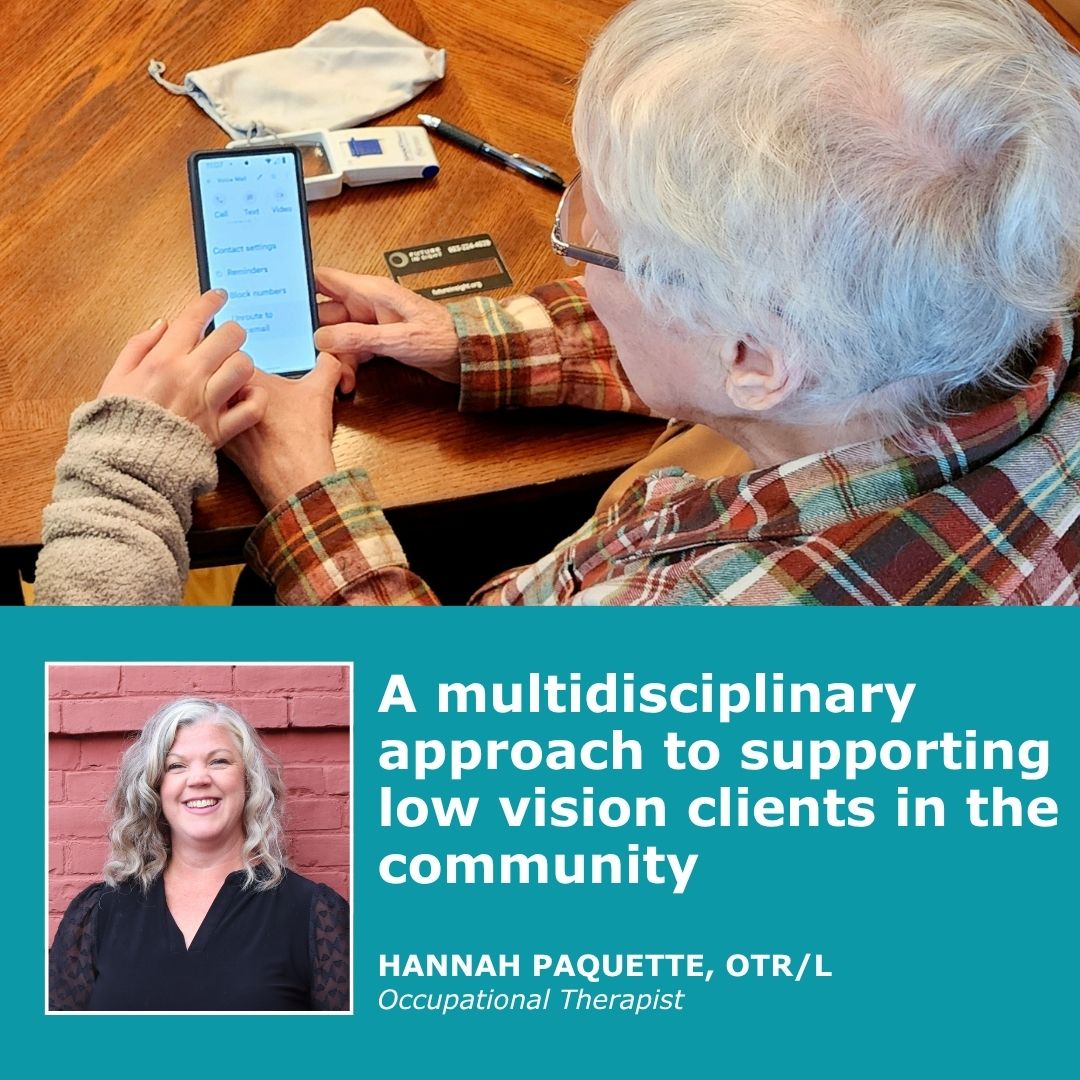
Living with low vision can impact nearly every aspect of daily life—from preparing a meal to navigating the neighborhood to engaging socially and emotionally. While each person’s experience is unique, one thing remains constant: no single professional can address all the challenges that come with vision loss. Effective support requires a multidisciplinary approach—a team of experts, each contributing specialized knowledge, working together toward one goal: helping Clients live more safely, confidently, and independently.
At Future In Sight, our multidisciplinary team includes Ophthalmologists, Optometrists, Occupational Therapists, Orientation and Mobility Specialists, Teachers of the Visually Impaired, Social Workers, Volunteer Coordinators, Care Coordination staff, Educators, and even our Marketing team—who help ensure that community members are aware of the services and support available to them. Together, we bring diverse perspectives and expertise, all centered around the needs of each Client.
Key Characteristics of a Multidisciplinary Low Vision Team
Diversity in Skill Sets and Expertise
Low vision rehabilitation is broad and relates to the functional, emotional, educational, and social needs of each Client. Each discipline approaches the Client with a different lens:
- Eye care providers (Ophthalmologists and Optometrists) diagnose and medically manage ocular conditions.
- Occupational Therapists help Clients safely perform daily activities and maximize usable vision.
- Orientation and Mobility Specialists support safe travel and navigation in home and community.
- Teachers of the Visually Impaired assist students with accessing educational materials and developing compensatory skills.
- Social Workers, Care Coordinators, and Volunteer Coordinators address emotional support, access to resources, and community engagement.
- Educators and Marketing professionals help Clients and families understand available services and support public awareness.
This range of skills allows the team to develop the most appropriate and effective plan of care, tailored to each Client’s goals and circumstances.
Collaboration Begins with the Client
Effective collaboration starts not in a meeting room, but with the Client’s story.
Every Client comes to us with unique circumstances—different living environments, health conditions, cultural considerations, emotional needs, and personal goals. When challenges arise, the team consults with one another to share insights:
- What strategies worked well?
- What techniques were less effective?
- What adaptations might help this Client reach their goals?
This ongoing dialog ensures the team is continuously adjusting and refining the plan of care to meet the Client where they are.
Improved Client Outcomes Through Interconnected Support
Low vision goals are often broad, but they are also deeply interconnected. For example, consider the seemingly simple goal of cooking a meal:
- The Client must be able to safely navigate the kitchen (orientation and mobility).
- They need motivation and confidence to engage in the activity (mental health and emotional support).
- They must be able to read appliances, identify ingredients, and use adaptive tools (occupational therapy).
- If the Client is a student, they may also need accessible formats or adapted skill-building strategies (TVI support).
Even a single daily task can require the coordinated work of multiple disciplines—and when these supports work together, Clients see faster progress and greater independence.
Client-Centered Goal Setting
Every evaluation begins with one essential question: What matters most to you?
Each team member works with the Client to develop goals that reflect their personal needs—whether they’re struggling with reading, mobility, home safety, self-care, education, or work tasks. No two treatment plans look alike because no two Clients are alike. This individualized, strengths-based approach helps Clients stay engaged and motivated throughout the rehabilitation process.
Effective Communication Is Essential
Strong communication ensures that each provider understands the Client’s progress and challenges. It also supports advocacy:
- Occupational Therapists communicate findings and functional implications to the eye care team.
- TVIs share information with school-based IEP teams.
- Social Workers and Care Coordinators communicate with families and community partners.
- Orientation and Mobility Specialists provide safety insights and environmental recommendations.
Clear documentation and communication help justify needed services, ensure continuity of care, and keep the Client at the center of every decision.
Why a Multidisciplinary Approach Matters
When Clients work with Future In Sight, they benefit from a community of professionals committed to improving safety, independence, and quality of life. Each discipline brings a piece of the puzzle—and when those pieces come together, Clients experience more meaningful and sustainable outcomes.
Low vision does not define a person. With the right team, the right tools, and the right support, Clients can continue to participate fully in their homes, schools, workplaces, and communities.
If you or someone you love is experiencing vision loss and could benefit from our services, please contact Future In Sight at [email protected] or 603-224-4039 today!
About the Author: Hannah Paquette is an Occupational Therapist (OT) at Future In Sight.