

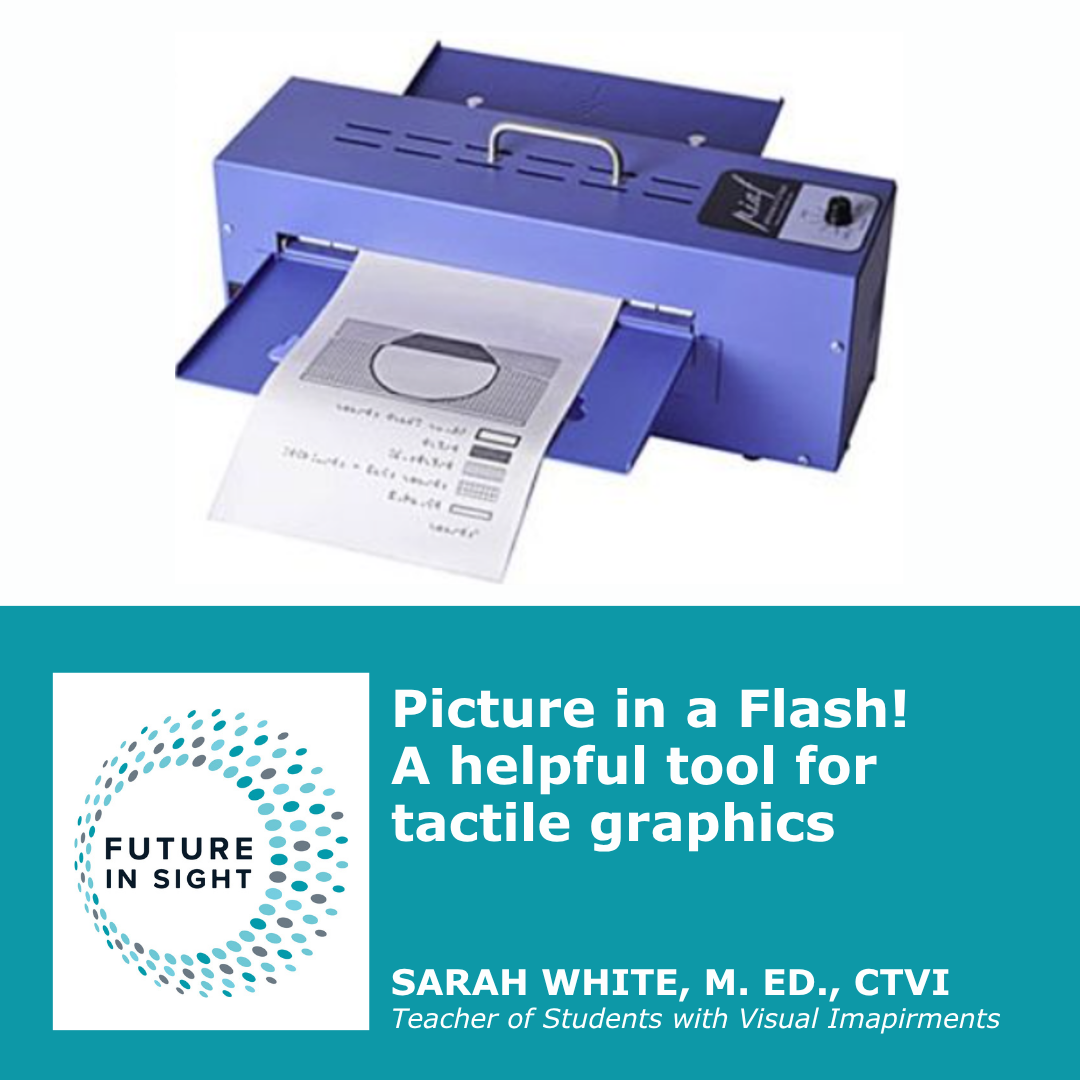
Does your child use their sense of touch to explore and learn? Perhaps you’ve created tactile drawings (also known as tactile graphics) to help them learn their shapes. Whether your child is learning shapes and numbers in pre-K and elementary school, studying graphs in middle school and high school, or learning the layout of their school building, tactile graphics can be a great way of making their work more accessible.
Many parents and teachers rely on arts and crafts supplies such as puffy paint or hot glue to make high quality tactile diagrams and maps, and while these materials can make very tactually readable diagrams, they can take a long time to dry and be difficult to use when fine details are required. If you or your child’s school team are struggling to create tactile graphics efficiently and effectively, a tool such as the Picture in a Flash machine might be a good option for you.
How to use the PIAF machine
To make a tactile graphic with the Picture in a Flash (PIAF) machine, create your graphic and print it or copy it onto special thermal paper called Tangible Magic Capsule paper using carbon-based ink, such as in a laser printer. You can also use a marker with carbon-based ink to draw directly onto the Tangible Magic Capsule paper. Once the graphic is on the thermal paper, simply turn on the PIAF machine and run the paper through it. The heat from the machine raises up the black ink on the page, and the two-dimensional graphic becomes a raised line graphic. Since the machine is easy to use, all team members can be trained to use it to create tactile materials!
An example of the PIAF machine being used in schools
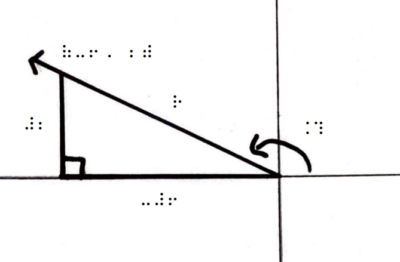
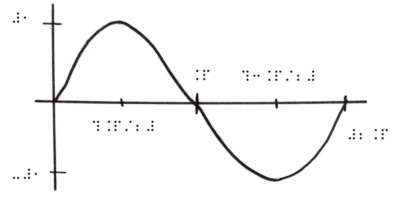
The PIAF machine was recommended to a school district for use with a student needing tactile graphics for an Honors Precalculus class. The TVI on the team was able to create graphs (with braille labels made using a simulated braille font) and email the file to the paraprofessional at the school, who easily printed them onto the thermal paper and fed the paper through the PIAF machine, making the graphs available to the student even when the TVI couldn’t be at the school in person. It also allowed the paraprofessional to make simple tactile graphics quickly and easily as they were needed.
The PIAF machine, tangible magic capsule paper in three sizes, and carbon-based markers can be ordered online from HumanWare.
About the author: Sarah White is a Teacher of Students with Visual Impairments (TSVI) for Future In Sight. She teaches students in schools how to use accessible technology and other strategies to thrive with vision loss. Learn about the services Future In Sight offers to youth here.