

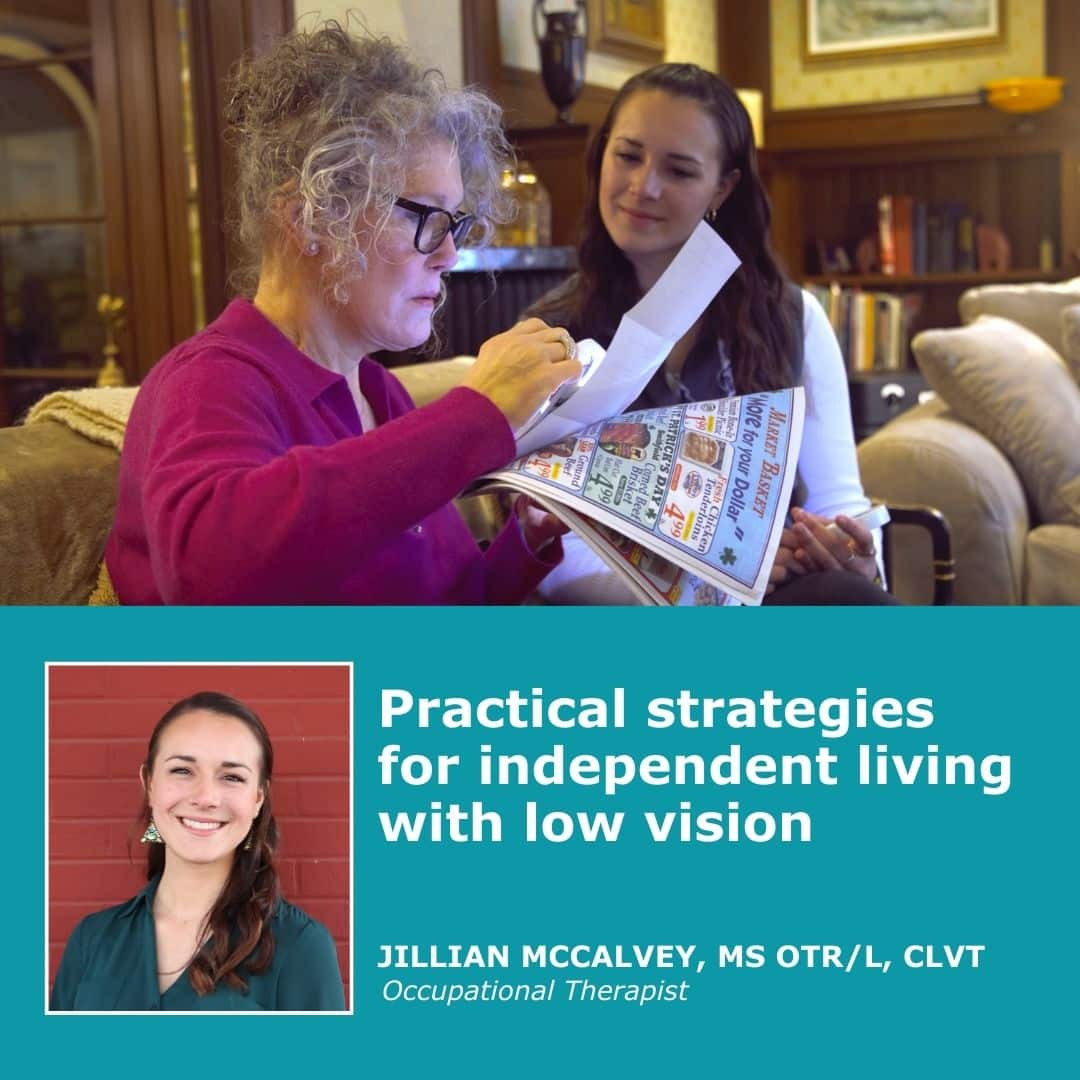
Living with low vision presents unique challenges, but with the right strategies and resources, you can maintain independence and confidence in your daily life. This guide introduces practical tips, available technology, and the professionals who can help you build essential independent living skills.
Independent Living Skills: Why They Matter
Independent living skills are the everyday tasks that allow you to manage your home, health, and lifestyle confidently. These include:
- Cooking safely
- Managing medications
- Organizing your home
- Handling finances
- Traveling independently
Daily Living Strategies
Simple adaptations and techniques can make everyday tasks like cooking, personal care, and managing finances easier and safer for people with a vision impairment.
- Cooking: Use audible timers, knife guards, and tactile labels for spices.
- Personal Care: Raised dots on shampoo bottles, color identifiers for clothing.
- Medication: Talking pill organizers, large print labels.
- Finances: Large print check registers, check writing guides.
Changes You Can Make Around the Home
Creating a safe and organized home environment is essential for independent living with low vision. Here are some practical tips:
- Declutter and Organize: Keep walkways clear and store frequently used items in consistent locations.
- Lighting: Use bright, glare-free bulbs for general lighting and use task lamps for up-close tasks like writing.
- Labeling: Apply tactile markers, braille labels, or large-print tags on appliances, medication, and food containers.
- Contrast: Use contrasting colors for countertops, cutting boards, and household items to make them easier to see.
What Technology is Available?
Technology plays a large role in low vision services today:
- Low-Tech Tools: Bold-lined paper, talking clocks, large print measuring cups, high contrast cutting boards, writing guides.
- High-Tech Solutions: Smartphone Apps such as Seeing AI or Be My Eyes, built-in screen readers, voice Assistants such as Alexa or Google Home, and electronic glasses such as the eSight Go or Meta AI glasses.
Low Vision Disciplines That Can Help
Building independent living skills with low vision often requires guidance from trained professionals. Here are key specialists who can make a difference:
- Low Vision Occupational Therapists: Provide education and training on adaptations and tools that can foster independence and safety in the home.
- Orientation and Mobility Specialists: Teach safe travel skills, including cane techniques and navigation strategies for indoor and outdoor environments.
- Teachers of the Visually Impaired (TVIs) and Youth Services: Support children and teens in developing independence at school and home, ensuring they thrive academically and socially.
- Vision Rehabilitation Specialists: Provide comprehensive training in independent living skills, technology use, and emotional support.
Emotional and Social Support
Joining support groups, connecting with peers, and engaging in community programs are also key factors in maintaining independence. Independence doesn’t mean doing everything alone – it means having the skills and confidence to manage daily life while knowing that support and resources are available when you need them.
If you or someone you love is experiencing vision loss and could benefit from our services, please contact Future In Sight at [email protected] or 603-224-4039 today!
About the Author: Jillian McCalvey, MS OTR/L, CLVT is an Occupational Therapist at Future In Sight.