

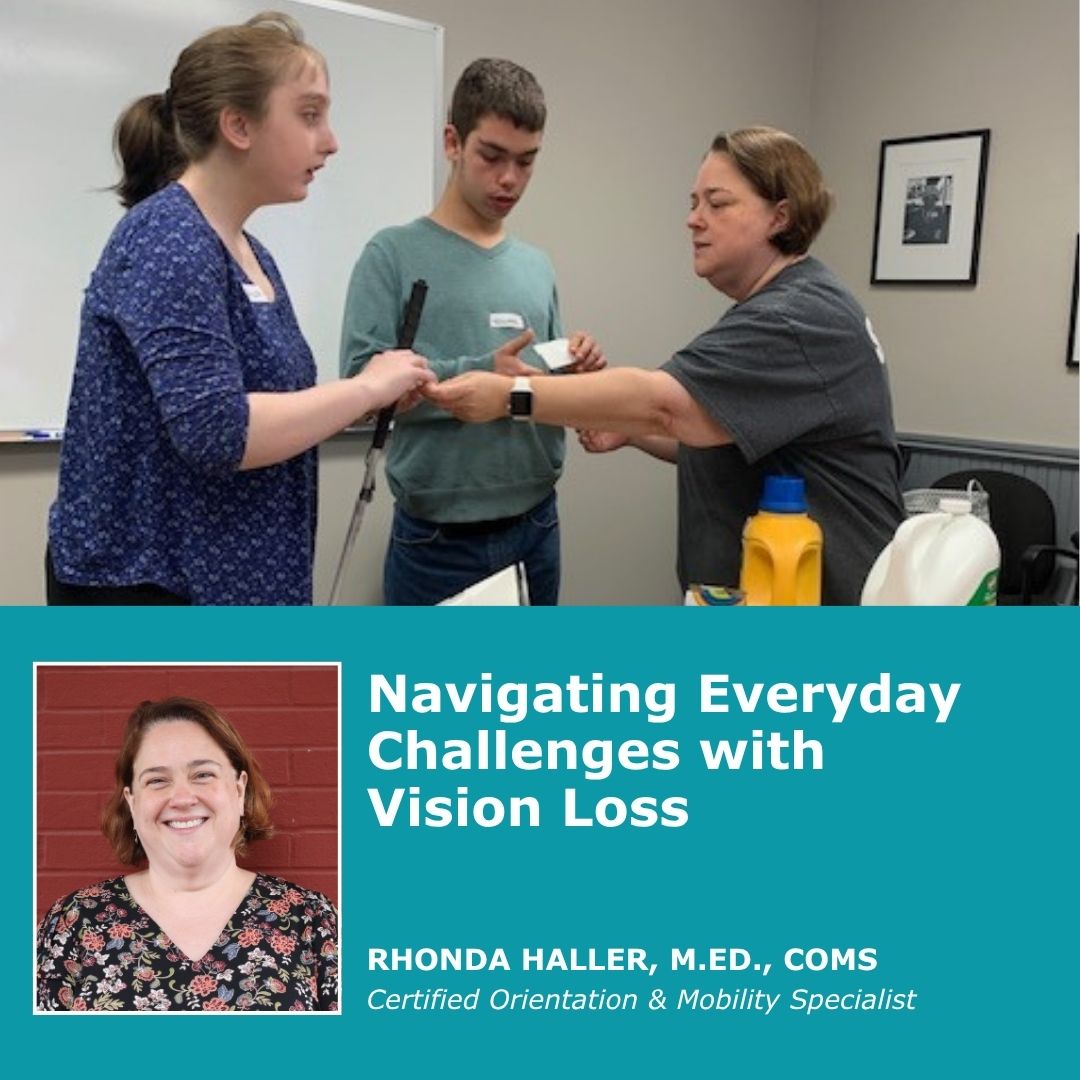
People with low or no vision share many of the same daily challenges as their sighted peers. For example, choosing the right outfit and finding that missing item before leaving the house. Limited vision adds an extra layer of challenge to those tasks. For instance, how do you put together an outfit if you can’t see color or locate that item without distance vision? It may be more challenging, but it is certainly possible to manage life without the use of vision. Here are some suggestions for those living with vision loss and their caregivers.
A Place for Everything, and Everything in its Place
- Choose locations for items such as a toothbrush, pair of shoes, cane, or coat.
- Always return items to the same location. Make sure everyone in the house knows not to relocate things without asking.
- Organize drawers and closets.
- Choose a system for identifying clothing. This can be a simple low-tech system with tactile or Braille tags or could involve the use of NFC-enabled tags and phone apps.
Plan Ahead
- Schedule and plan for daily activities so that tasks can be done in order without having to think about what’s next.
- Do what can be done the night before.
- Lay out clothes for the morning.
- Pack lunches and snacks ahead.
Seek Resources and Find Support
Connect with professionals who can help children and adults learn skills and use technology. Teachers of Students with Visual Impairments (TVIs), Certified Orientation and Mobility Specialists (COMS), Certified Assistive Technology Instructional Specialists (CATIS), and Occupational Therapists (OTs) work with people with vision needs to develop skills or re-learn how to perform tasks in non-visual ways.
About the author: Rhonda Haller is a Certified Orientation & Mobility Specialist (COMS) for Future In Sight. She works with students in schools to use devices and strategies to thrive with vision loss. Learn more about the services Future In Sight offers to youth here.