

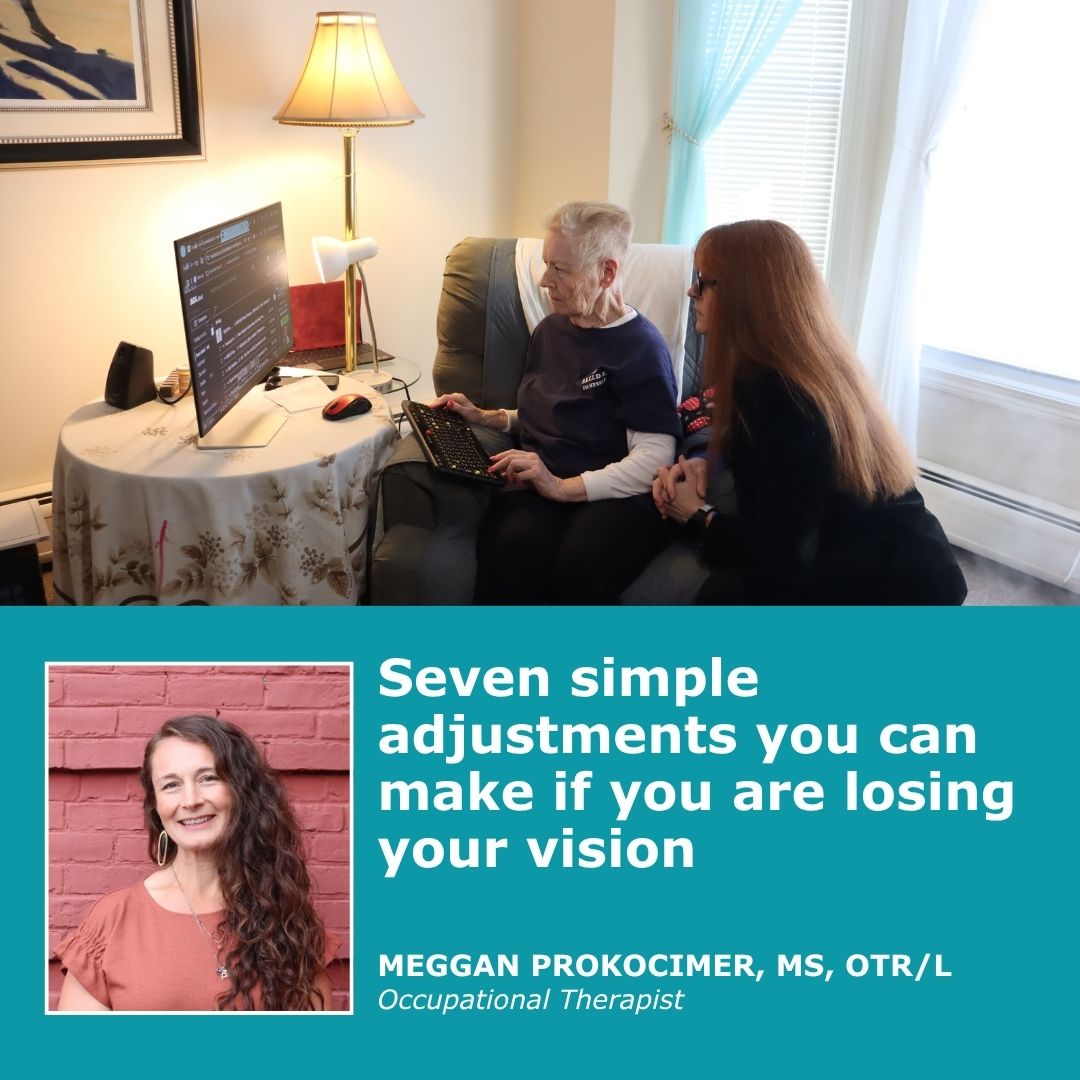
Vision loss, at any age, can potentially be overwhelming. That doesn’t mean you have to sacrifice doing what you love to do or giving up your independence.
There are many small things you can do to improve and organize around the house and, in the process, make your life simpler and more enjoyable. Here are seven small steps you can take in your own home to improve your lifestyle and make it easier to get around.
- Eliminate clutter by removing items that you aren’t using regularly. Whether sighted or not, many of us feel good when things are in order. Keep pathways clear, store everyday items in consistent places and consider labeling drawers or containers. Identifying a storage system that works for you will keep living areas clean and organized and help to prevent trips and falls.
- Modify lighting if additional lighting would help with your activities. Use bright bulbs, add lamps or place lights closer to where you read, cook or work. Task lighting such as gooseneck lamps or under-cabinet lights can help you focus the light exactly where you need it. Individual needs are specific, and experimenting with different types of lighting will be the best way to determine what works best for each situation.
- Use bright colors that reflect light or contrasting colors to label or identify items within the room. Play around with colors that “pop” out for you. Visit your local craft store for fabric paint in a variety of colors that work well for marking. Use high contrast by choosing colors that stand out from their background such as a dark light switch cover for white switches, a black/white cutting board and dark/light tape to mark the edge of the stairs.
- Organize things like drawers, closets, medicine cabinets, and dining areas. Be consistent with your organization by putting items in designated spots. Store frequently used items where they are easy to reach.
- Label items with dark permanent markers, such as Sharpies, write on blank address labels or index cards fastened to objects with a clip or rubber band. The options are endless: choose a system that suits your needs! Office supply stores offer other options like highlighters, tactile stickers (such as bump dots or Velcro) and colored dots.
- Engage others who are willing to assist you with these tasks, as well as any of your errands or appointments. Often, they don’t know how they can help, so just ask! Working on projects together or taking trips in the car can turn into valuable conversations with family and friends. There is always a benefit to socializing, so build in time to stop for coffee, lunch, or even ice cream!
- Reach out for one-on-one services, specialized devices, and assistive technologies that can help you live and thrive with vision loss . This is the best way to get from the initial shock of your vision loss to independence, safety, and contentment. Joining a support group is another way you can share concerns and frustrations and begin to learn tips and tricks from others who have had similar experiences.
The good news is that you can remain independent without having to do it alone. With a positive attitude, practice, people, and professional services in your corner, you’ll find that you are able to continue to live a full, active and rewarding life. There are many stories of individuals who’ve continued to live independently despite their vision loss.
There are a lot of resources at your disposal, licensed and certified professionals who can help, and others in your community who have varying degrees of sight loss.
If you or someone you love is experiencing vision loss and could benefit from our services, please contact Future In Sight at [email protected] or 603-224-4039 today!
About the Author: Meggan Prokocimer is an Occupational Therapist (OT) at Future In Sight.