

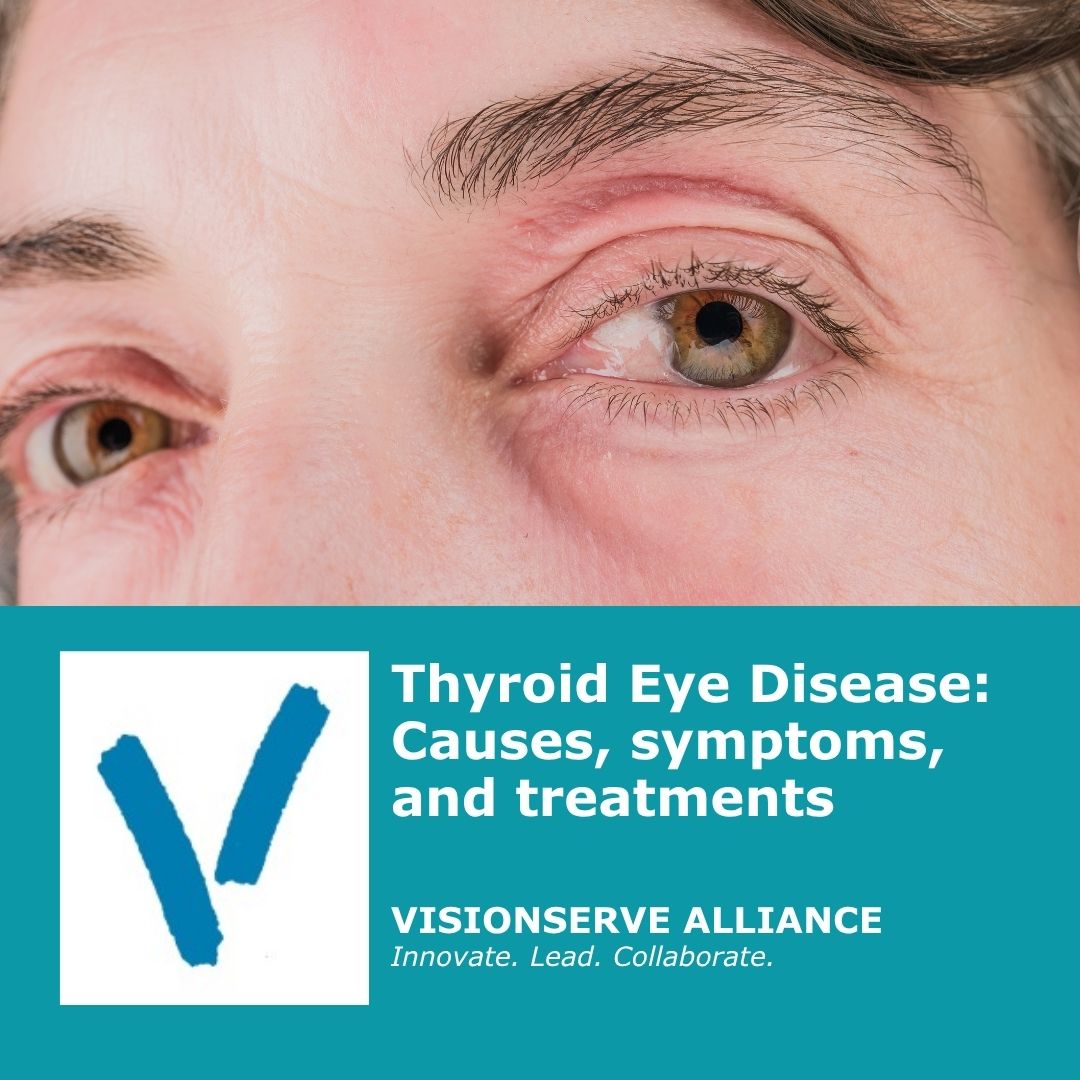
What is Thyroid Eye Disease?
Thyroid eye disease (TED) is an autoimmune disorder that is also known as Graves’ eye disease, Graves’ orbitopathy, thyroid-associated ophthalmopathy (TAO), Graves’ ophthalmopathy (GO), or thyroid orbitopathy. Doctors are unsure of the exact cause of TED; it is understood to be an autoimmune condition in which the immune system mistakenly attacks the tissues around the eyes. Although Thyroid eye disease is often progressive, it can go into remission.
Graves’ disease is a systemic, autoimmune condition that results from an overproduction of thyroid hormone triggered by the body’s immune cells attacking the thyroid gland. Up to fifty percent of those living with Graves’ disease develop some eye involvement, called thyroid eye disease. People with a family history or diagnosis of other autoimmune conditions, including Hashimoto’s thyroiditis, type 1 diabetes, lupus, or rheumatoid arthritis, are at increased risk for developing Graves’ disease and TED. Smoking and stress can worsen thyroid eye disease, which is considered a rare condition. Studies estimate that 150-250 people per 100,000 develop TED. Women are disproportionately affected, being five times more likely to develop TED than men. However, men tend to have more severe Thyroid eye disease at an older age.
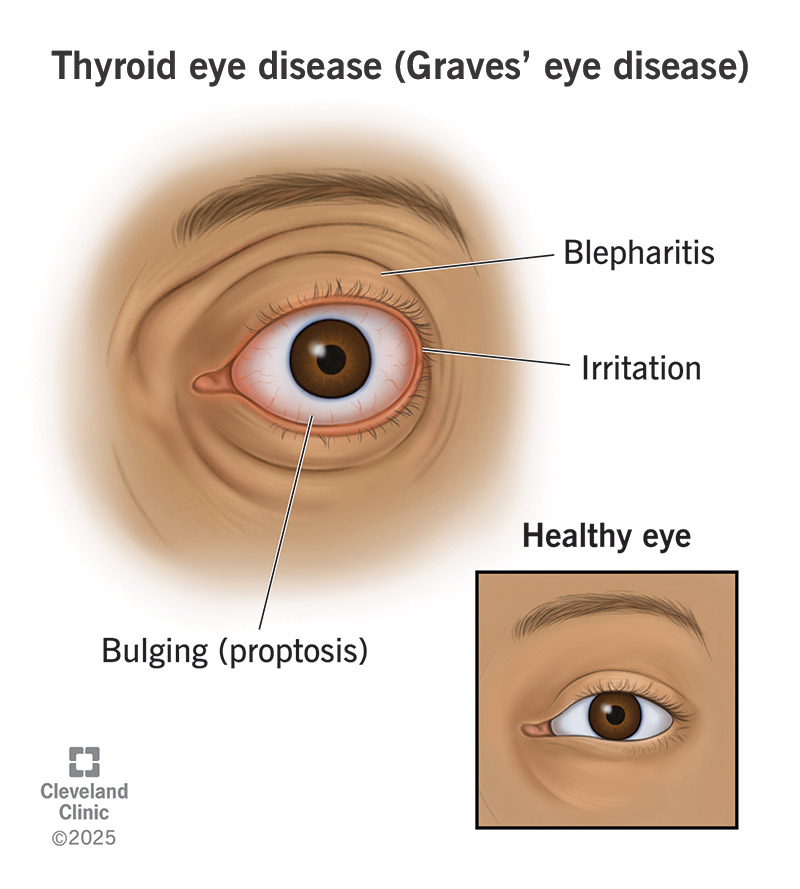
TED produces inflammation of the fat and muscle around the eyes, leading to the formation of scar tissue. In addition to causing changes in appearance, such as bulging eyes, retracted eyelids, excessive exposure of the whites of the eyes, and puffiness of the surrounding areas, TED can impair vision. If left untreated, or in more severe cases, TED can cause vision loss.
Early intervention and treatment are key. The American Optometric Association recommends annual comprehensive eye exams (with dilation) for adults. Those with a family history or diagnosis of an autoimmune disorder should discuss the benefits of closer monitoring with their eye doctor, primary care physician, or endocrinologist.
Signs and Symptoms of Thyroid Eye Disease
The outward, observable manifestations and symptoms of thyroid eye disease often occur in both eyes, though only one eye may be affected. Signs and symptoms vary according to each person’s unique circumstances, health, and lifestyle, and may include:
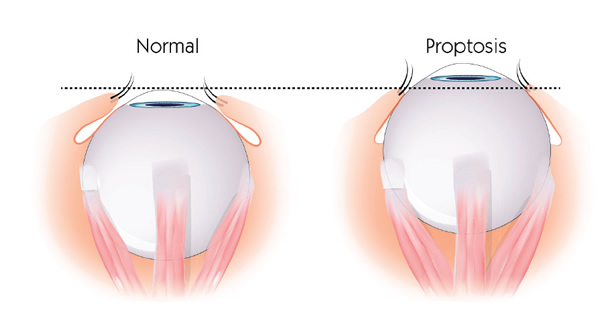
- Bulging eyes (proptosis).
- Misalignment of eyes (strabismus)
- Retracted eyelids
- Red eyes
- Dry eyes
- Watery eyes
- Red/puffy/irritated eyelids and/or under eyes
- Feeling of eye grittiness/irritation
- Sensitivity to light
- Pain or pressure behind the eyes
- Pain with eye movement
- Double vision (diplopia)
- Blurry vision
- Difficult eye movement
Stages of Thyroid Eye Disease
How to Test for Thyroid Eye Disease
Consult your eye doctor as soon as possible if you experience any symptoms of TED, changes in your eyes, or vision changes. Thyroid eye disease can be diagnosed during a comprehensive eye examination. The optometrist or ophthalmologist can check the pressure in your eyes, look for changes in the tissue around your eyes, and measure any vision changes, such as blurriness, sensitivity to light, or double vision. If signs and symptoms of TED are detected, your eye doctor may refer you to a TED specialist, such as an oculoplastic surgeon, neuro-ophthalmologist, or an ophthalmologist or endocrinologist specializing in TED. Follow-up testing with a TED specialist may also include a CT or MRI of the back of the eye and a blood test to assess thyroid function and antibodies.
Thyroid Eye Disease Treatment
An autoimmune disease is a red flag that your system is not functioning as it should. While there is a genetic component to TED, lifestyle choices are also important. Managing stress, what you eat and drink, not smoking, and staying physically active will reduce risk and improve treatment outcomes.
A first-line treatment for thyroid eye disease includes drops and gels that relieve the discomfort of inflammation, grittiness, dryness, or retracted eyelids. Cool compresses can also help alleviate swelling and discomfort. Some doctors recommend taping the eyelids shut while sleeping and elevating the head to reduce eye pressure and swelling. Thyroid eye disease treatment may include exercises to strengthen eye muscles, prism glasses to realign the eyes in those experiencing double vision, or sunglasses to reduce light sensitivity. Steroids may be prescribed to counter inflammation. Orbital radiotherapy (ORT) is an outpatient treatment used to control inflammation, conducted over several sessions in which a laser targets the affected area in the back of the eye. Radioactive iodine therapy may also be used to treat Graves’ disease, but this treatment can exacerbate TED.
Surgery for Thyroid Eye Disease
Early diagnosis and treatment are key to preventing permanent damage to vision and misshapen eye appearance. Multiple surgeries, performed by oculoplastic surgeons or neuro-ophthalmologists, are sometimes needed to repair TED symptoms such as the build-up of scar tissue, unaligned or bulging eyes, retracted eyelids, and double vision. These procedures may include:
- Orbital decompression surgery
- Strabismus surgery
- Eyelid repositioning surgery
- Face sculpting
Eyes on Nutrition
Foods high in trans fats, processed food, refined carbs, and sweets can increase inflammation and aggravate TED, whereas eggs—particularly pasture-raised—provide thyroid-beneficial iodine and selenium.
The TED Community Organization provides information, research, resources, and a community of support for anyone affected by Thyroid Eye Disease & Graves’ Disease.
If you or someone you love is experiencing vision loss and could benefit from our services, please contact Future In Sight at [email protected] or 603-224-4039 today!
About the Author: Future In Sight is a member of VisionServe Alliance which leads a consortium of organizations across the United States and Canada to generate significant advancements in the Vision Loss field.