

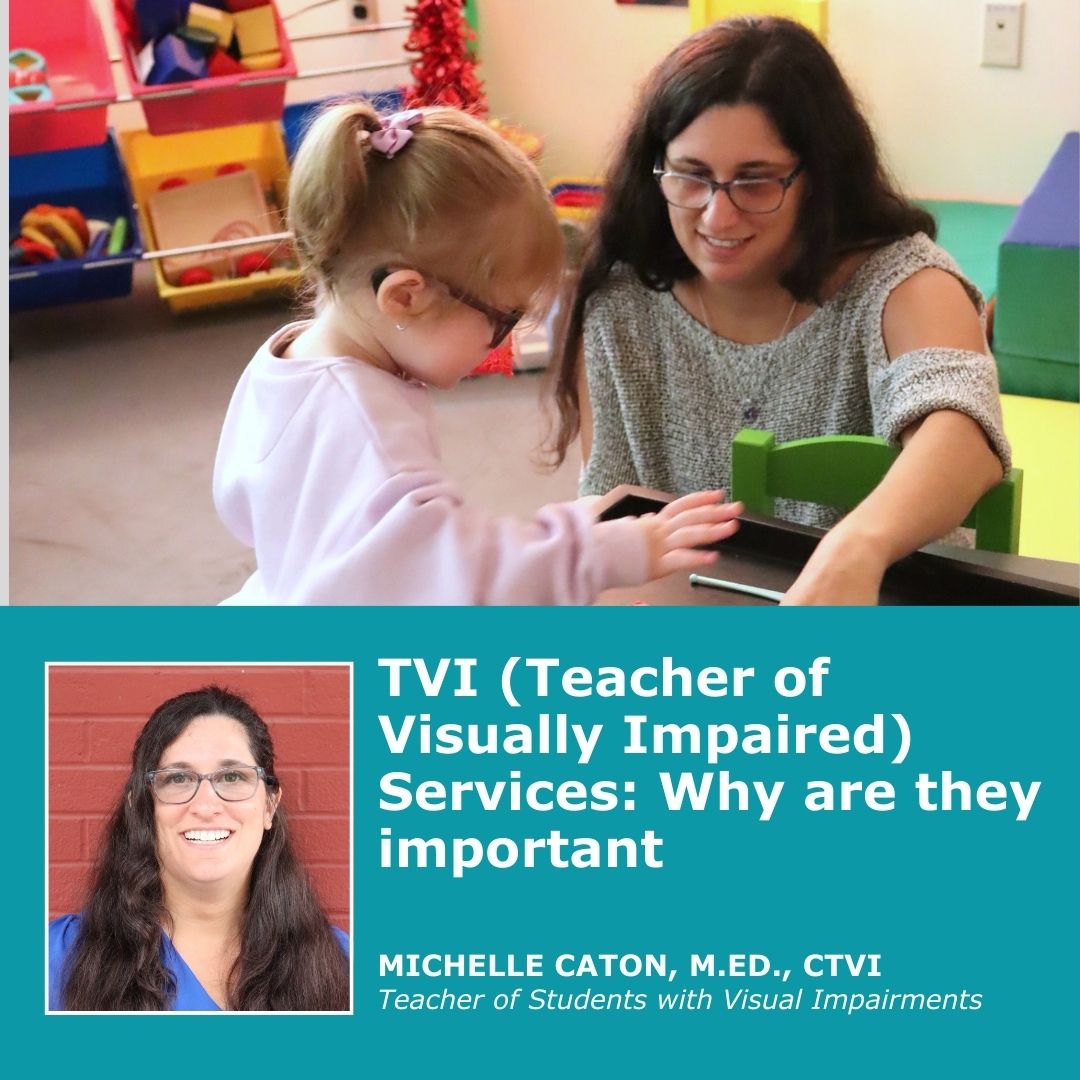
Initially, when thinking of services provided by a Teacher of Students with Vision Impairments, people think of teaching braille. Although this is one aspect of a TVI’s services, there are many other areas that a TVI (Teacher of Visually Impaired) can help with. A TVI can teach any area of the Expanded Core Curriculum that a student may need. The Expanded Core Curriculum has 9 areas that are outside the general education curriculum. These areas include skills that students need to be successful in accessing their education and the rest of their lives.
The Expanded core includes the following areas:
- Assistive Technology: Students are taught how to use assistive or adaptive tools. These tools can include video magnifiers, screen readers, or how to use a computer efficiently.
- Career Education: Students are taught skills that can help them in their future careers. These skills can include organization or time management skills. This can also include career exploration to help a student determine careers that interest them and any accommodations they would need to be successful.
- Compensatory Skills: This includes sills students need to access the general education curriculum. These skills can include accessing tactile materials, learning braille, or accessing print.
- Independent Living Skills: Students learn skills to help them live independently. These skills include personal hygiene, eating skills, food preparation, time and money management, etc…
- Orientation and Mobility: Students learn how to navigate their environment safely and as independently as possible. This can include how to use a cane or navigate intersections safely. Students may also learn how to use map applications, and use city transit.
- Recreation and Leisure: Students learn about different things that they enjoy outside of the educational curriculum. These skills can include how to play different sports, art, or music.
- Self-Determination: Students learn how to advocate for their needs in a classroom, professional, or any other settings they may need help in. These skills can include asking for help or goal setting.
- Sensory Efficiency Skills: Students learn how to use their 5 senses to explore an access their world. The students can learn to confidently use tactile skills to explore objects and environments. They also learn how to functionally use any remaining vision they may have.
- Social Interaction Skills: Student learn how to appropriately socialize with their peers. Students with vision impairments may miss gestures or facial expressions and need to learn what is appropriate and how to interpret social cues when they cannot see them all.
Students with vision impairments have to learn many of these skills with specialized instructions as they cannot watch their friends and family to learn incidentally. TVI’s help support students in learning those skills that students may miss due to vision loss.
Another large part of a TVI’s responsibilities is to consult with teams and families of students with vision impairments. The TVI can help the teams create accessible materials, train teams on assistive technology, or help teams understand what the student is seeing so they can better support the student.
A TVI wears many hats and try to support students, staff, and families.
For more information on TVI Services and The Expanded Core Curriculum:
If you or someone you love is experiencing vision loss and could benefit from our services, please contact Future In Sight at [email protected] or 603-224-4039 today!
About the Author: Michelle Caton, M.ED, CTVI, is a Teacher of Students with Visual Impairments (TSVI) at Future In Sight.