

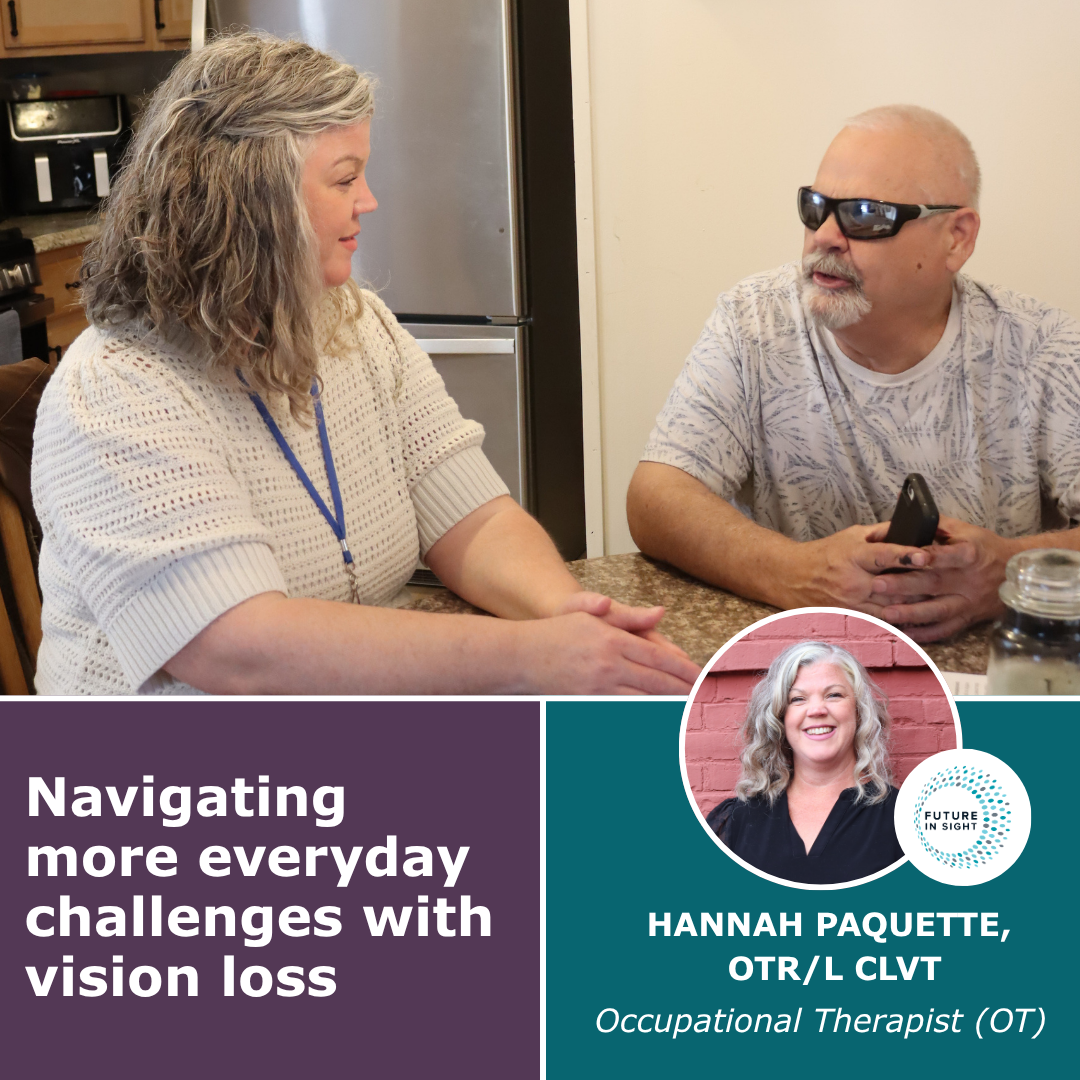
Vision loss can affect every stage of adulthood, from young adults entering the workforce to older adults striving to maintain independence at home. While each individual’s experience is unique, there are common daily challenges that many people with low vision or blindness face. The good news is that occupational therapy, low vision training, adaptive equipment, and environmental modifications can help people continue to participate in meaningful activities and maintain their independence.
Here are five common daily challenges many adults face on a day-to-day basis. You will also find practical coping and adaptive strategies.
1. Managing Medications and Health Care
For many adults, taking medications correctly and managing health care appointments are essential parts of daily life. Vision loss can make it difficult to read prescription labels, identify medication bottles, track dosage schedules, track medical appointments using a calendar, or review important medical paperwork.
Helpful Strategies:
- Use large-print or talking medication labels.
- Organize medications with tactile markers or weekly pill organizers.
- Set reminders through smartphones, smart speakers, or talking alarms.
- Request medical documents in accessible formats, such as large print or electronic versions compatible with screen readers.
These adaptations can reduce medication errors and increase confidence in managing personal health.
2. Meal Preparation and Household Tasks
Cooking, cleaning, and managing household responsibilities often become more challenging when visual information is limited. Reading recipes, measuring ingredients, identifying food items, and safely using kitchen appliances may require new approaches.
Helpful Strategies:
- Label food containers and appliances with tactile markers, braille, or large-print labels.
- Improve lighting and reduce glare in work areas.
- Establish consistent organizational systems so items are always stored in the same location.
- Learn safe cutting and cooking techniques through occupational therapy and low vision training.
With appropriate training and tools, individuals can continue preparing meals safely and independently.
3. Navigating the Community and Accessing Transportation
Getting to work, medical appointments, social events, and community activities can be difficult when transportation options become limited. Challenges with driving, reading signs, crossing streets, or navigating unfamiliar environments can lead to reduced independence and social isolation.
Helpful Strategies:
- Utilize orientation and mobility training to improve travel skills.
- Learn to use public transportation or rideshare applications.
- Consider support from community organizations that provide transportation assistance.
Maintaining community access is critical for employment, healthcare, and social participation.
4. Managing Technology and Communication
Technology has become essential for work, healthcare, banking, social engagement, and everyday communication. However, standard devices and websites can present accessibility challenges for individuals with vision loss.
Helpful Strategies:
- Use built-in accessibility features such as magnification, screen readers, voice commands, and high-contrast settings.
- Utilize optical or electronic magnification devices.
- Learn keyboard shortcuts and voice assistant functions.
When individuals understand and use accessible technology effectively, they can stay connected, productive, and informed.
5. Maintaining Social Connections and Meaningful Activities
Vision loss can sometimes lead people to withdraw from activities they once enjoyed. Difficulty recognizing faces, reading social cues, driving, or participating in hobbies may contribute to feelings of frustration, loneliness, or reduced confidence.
Helpful Strategies:
- Encourage participation in support groups and peer mentoring programs.
- Explore adaptive methods for hobbies such as reading, crafting, gardening, or sports.
- Use audiobooks, accessible recreation programs, and assistive technology.
Remaining engaged in meaningful activities helps support emotional well-being, independence, and overall quality of life.
Final Thoughts
Vision loss can create unique challenges throughout adulthood, but it does not have to prevent individuals from living active, fulfilling, and independent lives. The staff at Future In Sight can play a vital role in helping people develop adaptive strategies, learn new skills, and access tools that support participation in everyday activities.
At Future In Sight, our goal is to empower individuals with vision loss to overcome barriers, maximize independence, and continue doing the activities that matter most to them. Through person centered approach, education, and training, we help clients build the skills and confidence needed to navigate life’s challenges at every age.
Remember: Independence isn’t about doing things the same way—it’s about finding new ways to do the things that matter most.
About the Author: Hannah Paquette, OTR/L, CLVT is an Occupational Therapist (OT) for Future In Sight. She visits individuals in their homes to provide training on how to navigate life with vision loss. Learn more about the services Future In Sight offers to adults here.